 THE STANDUP
 CTXWINDOW
 AGENTWIRE
 BLOCKDEX
 COMPOUND
 USINGITUP
 TRUSTDESK
BenchFile files NYC Local Law 84 reports and tracks the cure
BenchFile checks a New York City building against Local Law 84, finds open benchmarking violations, files the overdue report, and keeps the annual deadline visible.
---
BenchFile
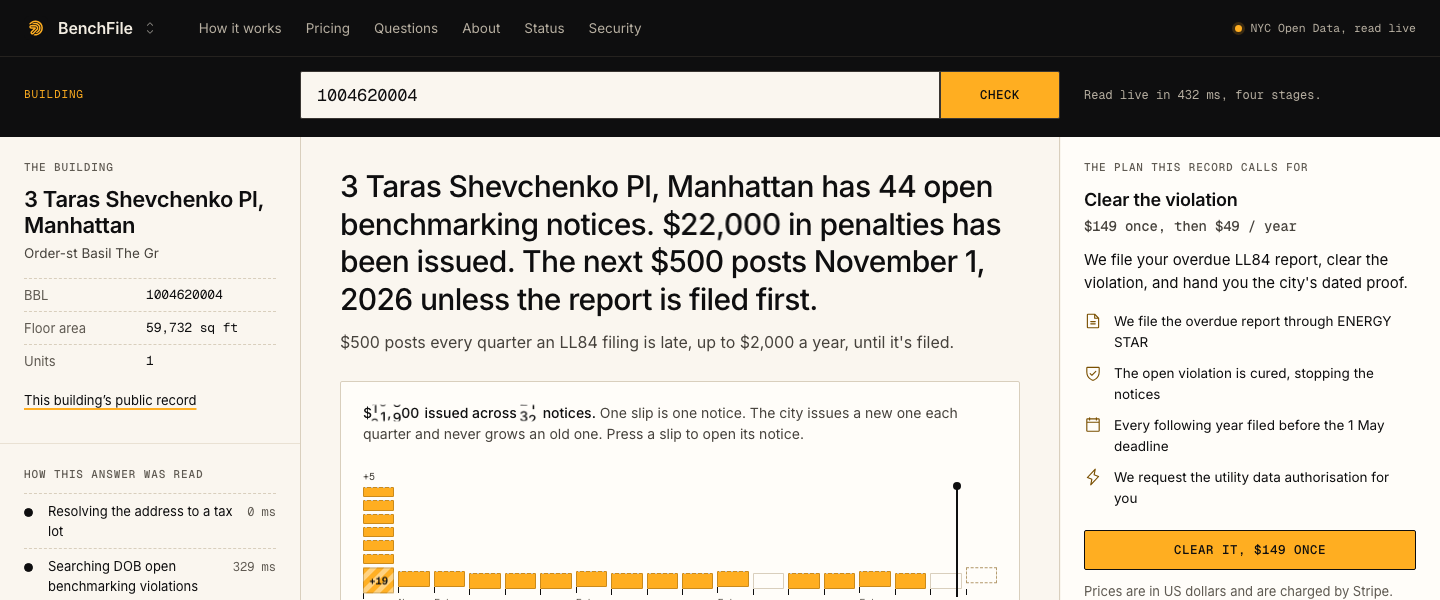
The building lookup console
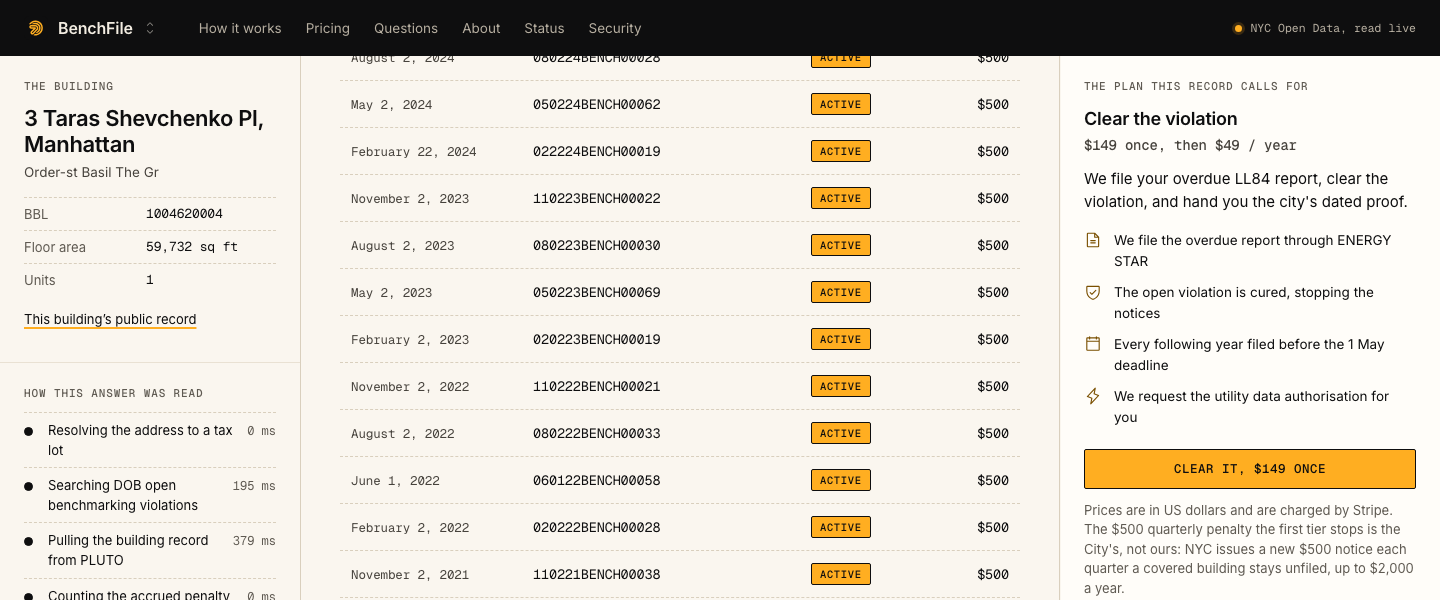
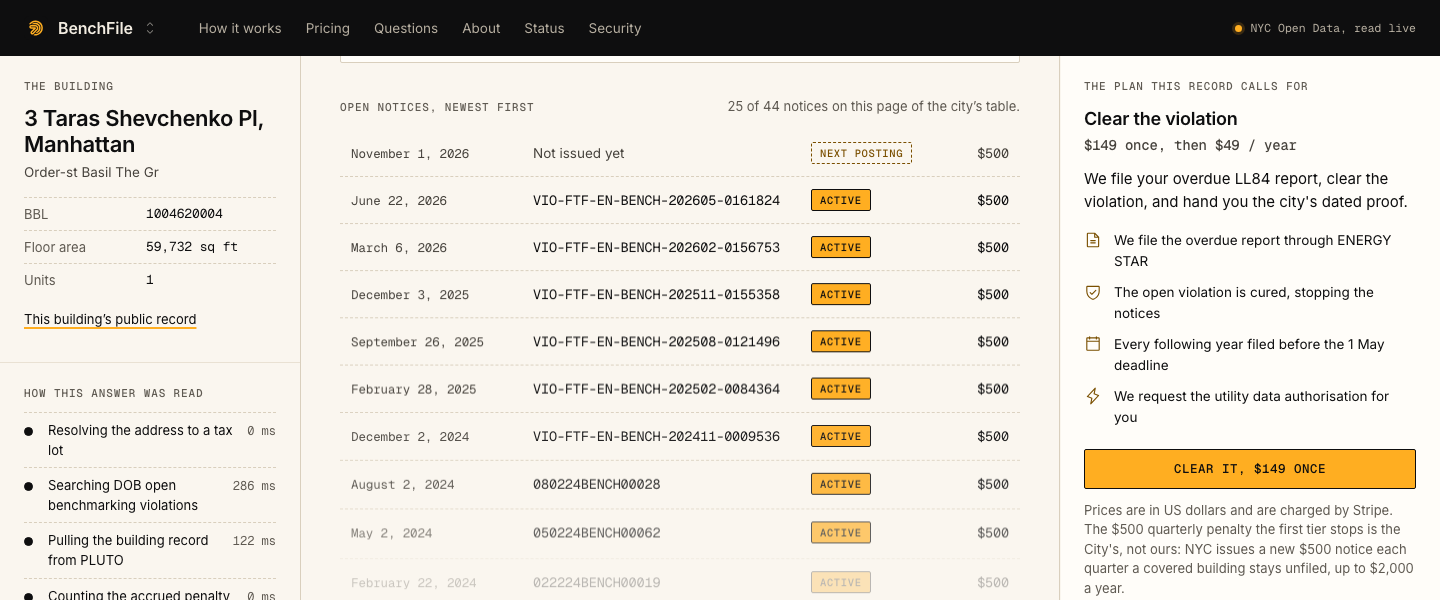
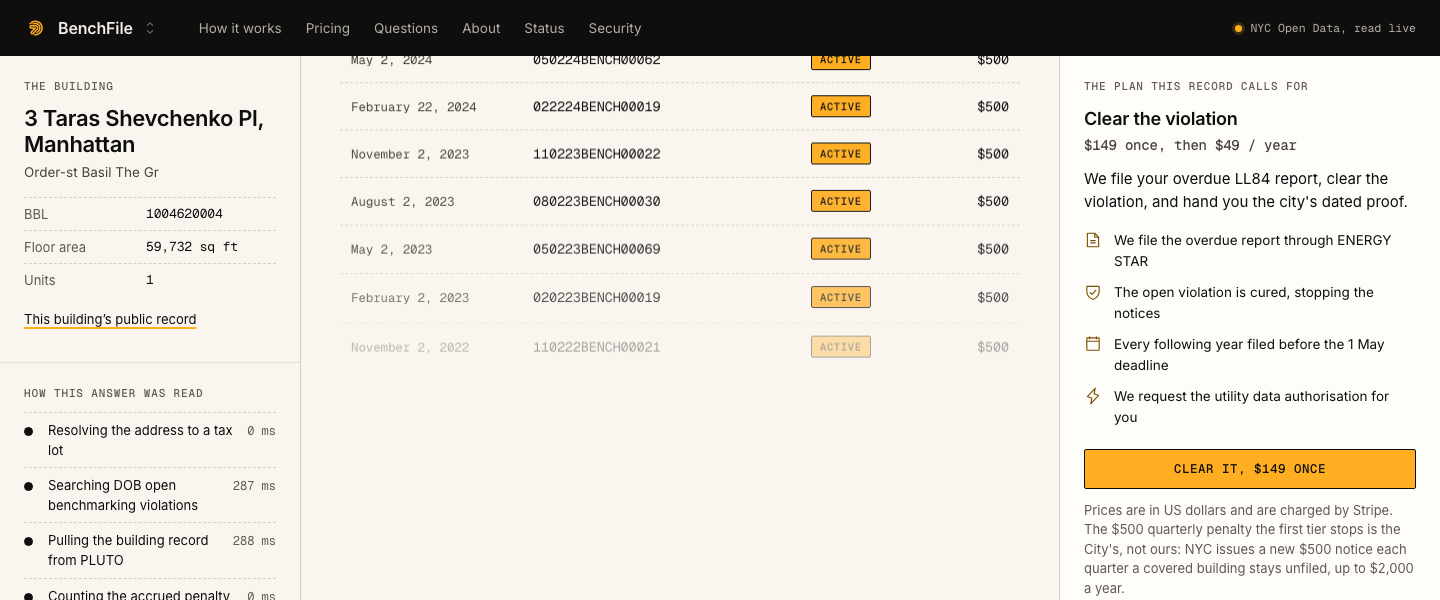
The home page opens with a featured building, its address, borough, building area, violation number, and open notice count. The current featured property is 213 East 6 Street in Manhattan, with 12 open notices and violation VIO-FTF-EN-BENCH-202602-0156753.
The lookup reads NYC Open Data when an address is entered. It checks the building record, the covered-building data, and the violation data before showing the result.
The violation payment kit
The payment kit shows the violation number, accrued penalty, next deadline, and the steps the owner completes in DOB NOW. The featured kit shows a $6,000 accrued penalty and a May 1, 2027 next deadline.
BenchFile files the overdue report, but the owner pays the accrued penalty directly through their own DOB NOW account. The kit keeps those two actions separate and explains what must happen before the violation moves toward dismissed.
Pricing
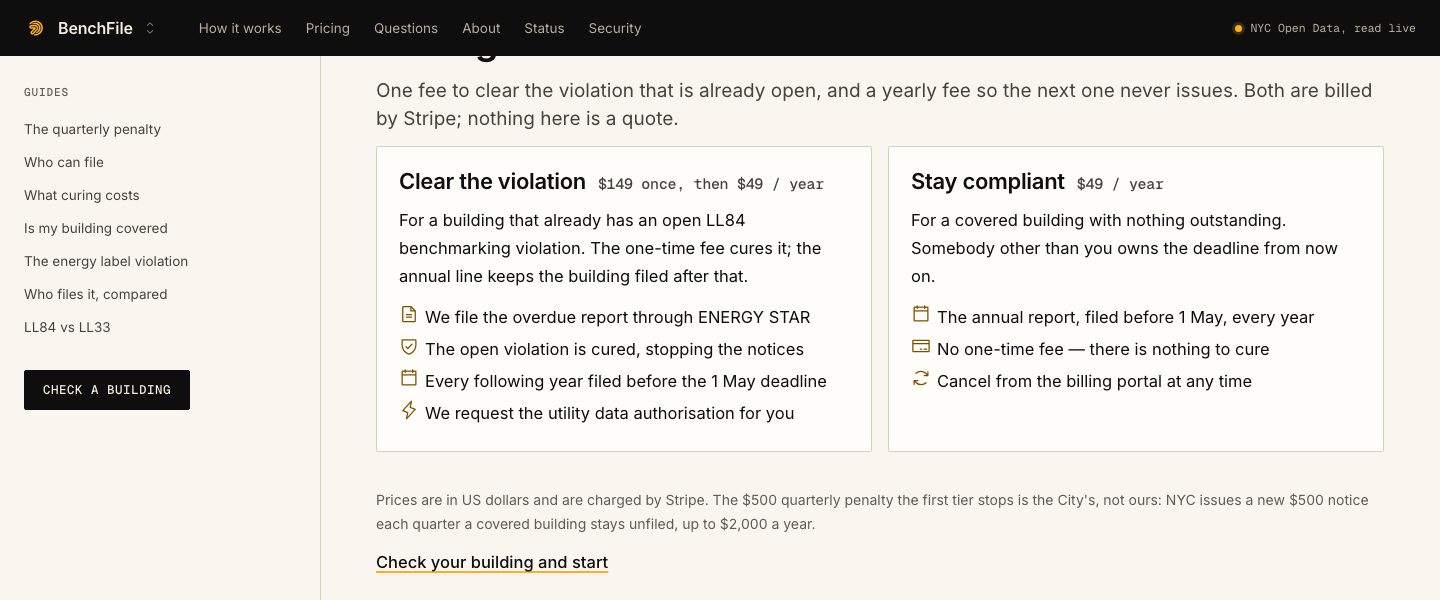
The pricing page has one option for a building with an open violation and another for a covered building with nothing outstanding. The first is $149 once, then $49 per year. The second is $49 per year.
The first option covers the overdue ENERGY STAR Portfolio Manager report, the open violation cure, the following annual filing, and utility data authorisation. The annual option covers filing before May 1 and allows cancellation from the billing portal.
Questions
The Questions page answers who can file, which buildings are covered, how the penalty accumulates, and what happens when a violation was issued in error. It states that an owner can assign a representative to file the benchmarking report.
It also separates Local Law 84 from the energy-grade label requirement under Local Law 33. The two duties have different deadlines, penalties, and challenge routes.
Status
The Status page reports BenchFile as Operational and shows that the site answered with HTTP 200 in 775 milliseconds. It also displays the last published change from the product host.
The page checks the site response, publication freshness, and the work behind the product before presenting its status. I kept those checks visible instead of reducing the page to a single health badge.
Security
The Security page explains what BenchFile stores and who processes payments. It says the building lookup reads public NYC datasets when an address is entered and keeps nothing typed into that lookup.
The page also provides a vulnerability reporting route and describes the payment processor without handling the owner's city penalty payment. I kept the city payment outside BenchFile and the filing workflow inside it.
Multiple shipped products, taken apart, few times a week. What each one does, what it cost to build, what the pipeline behind it looks like, and what the numbers did, read off the repository and the live site, not written from memory. Join the list.